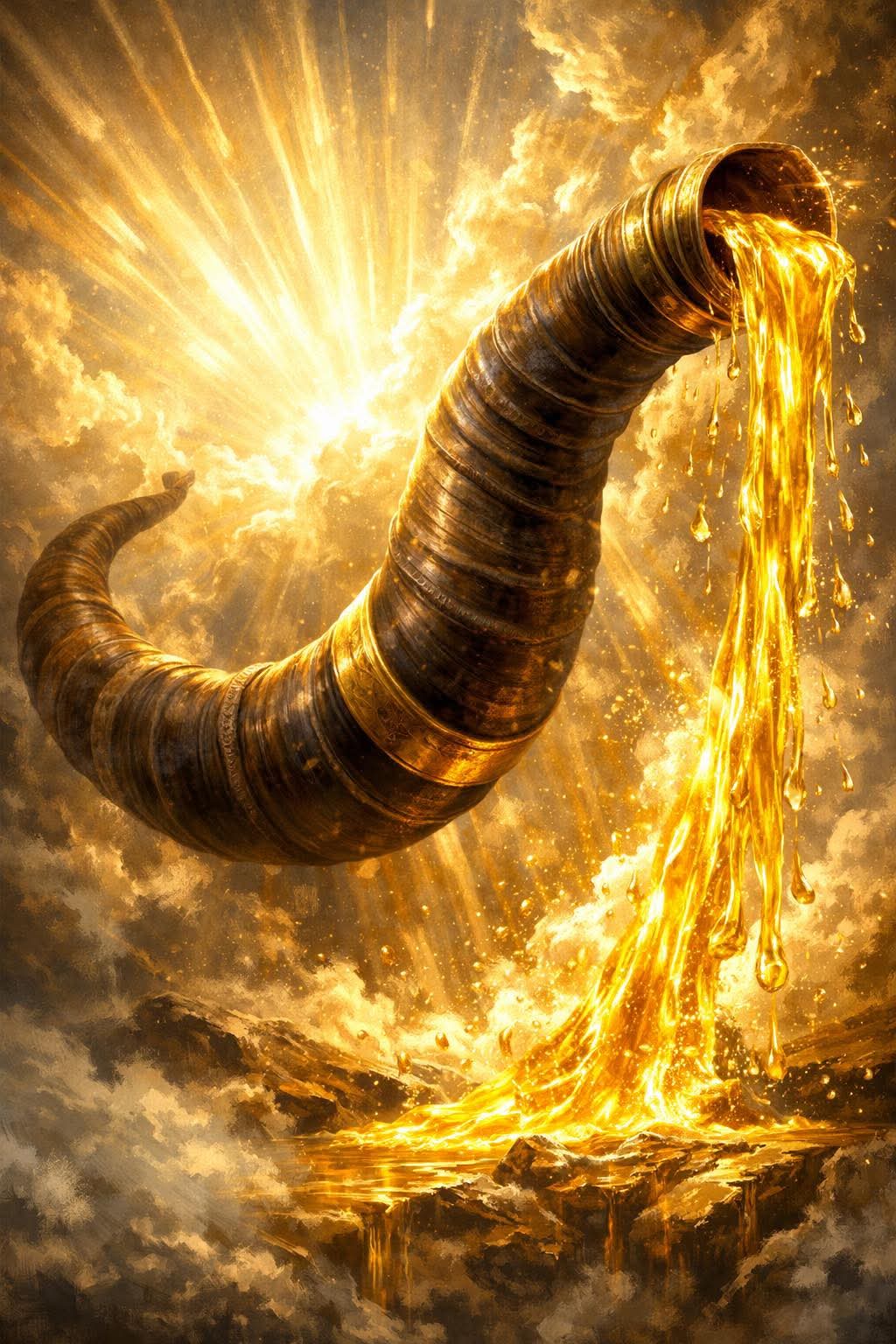
The Sound of the TEKIAH
The Tekiah blast of the shofar carries a very specific sound and a weighty spiritual message.
What is the Tekiah blast?
Tekiah is a long, straight, unbroken sound. It is clear, steady and sustained without interruption. Unlike the broken or trembling blasts, Tekiah is consistent from beginning to end.
📯 Tekiah – Royal Sound of Alignment, Authority, and Advance
Biblically and prophetically, the sound of the Tekiah is deeply rooted in the testimony of Scripture as a sound that carries weight, clarity, and divine intention. It is not merely a musical note from the shofar, but a prophetic declaration that echoes across kingship, covenant order and spiritual movement under the authority of YAHUAH.
Throughout Scripture, the shofar is closely associated with the revealing of kingship. When Solomon was anointed as king, the trumpet was blown and the people responded with the declaration of his reign (1 Kings 1:39).
In a far greater expression, the Psalms reveal that the sound of the trumpet accompanies the enthronement of YAHUAH Himself: “YAHUAH has gone up with a shout, YAHUAH with the sound of a trumpet… for Aluah is the King of all the earth” (Psalm 47:5–7). Again in Psalm 98:6, we see the same pattern: “With trumpets and the sound of the shofar shout joyfully before YAHUAH, the King.”
In this light, the Tekiah carries the prophetic imprint of a royal announcement. It is a sound that declares authority established and recognized. It speaks of YAHUAH’s reign being made manifest over a people, within a region and within a divine moment in time. Wherever this sound is released, Scripture consistently shows that kingship is being declared and acknowledged.
Yet Tekiah is not only about declaration, it is also a sound of alignment. In Numbers 10, YAHUAH instructs Moses regarding the use of the silver trumpets for the calling of the congregation and the ordering of the camp.
The sound was not random, it was directional. It gathered the people into unity, into timing, and into obedience to divine instruction. “In the day of your gladness… you shall blow the trumpets… and they shall be a memorial before YAHUAH your Aluah” (Numbers 10:10).
Because Tekiah is a single, sustained blast without fragmentation, it prophetically reflects clarity and order. It carries the idea of one voice, one direction and one alignment.
Spiritually, it calls YAHUAH’s people out of mixture and confusion and back into structured obedience and into agreement with His will and His appointed timing. It is a sound that brings things back into place under divine order.
At the same time, Tekiah is also deeply connected to movement and victory. The shofar was repeatedly used in battle contexts where YAHUAH Himself brought breakthrough for His people.
At Jericho, the walls fell after the appointed trumpet blast (Joshua 6:5). In the days of Gideon, the sound of the trumpets accompanied divine confusion in the camp of the enemy and led to victory without conventional warfare (Judges 7:20–22). Scripture even describes those who understand the “joyful sound” as those who walk in covenant blessing and divine favor (Psalm 89:15).
From this pattern, Tekiah carries the prophetic weight of advancement. It is not merely a warning sound, it is a command of movement. It signals that YAHUAH is leading His people forward, and that opposition will not define the outcome.
Where Tekiah is sounded, there is divine activation, breakthrough, and forward progression under His leadership.
Taken together, the testimony of Scripture reveals Tekiah as a sound of kingship, alignment, and advance. It is the sound of YAHUAH establishing His rule, bringing His people into order, and leading them into appointed movement and victory.
In this sense, there is indeed a Tekiah sound that can be discerned in the Spirit, one that calls for clarity, correction of direction, and readiness for divine transition.
It is the sound of YAHUAH bringing His people out of delay and into alignment with His appointed purposes, where structure is restored and movement is released according to His will.
Across Scripture, the shofar (Tekiah) consistently functions as:
- A coronation sound (1 Kings 1:39)
- A kingdom proclamation (Psalm 47:5–7)
- A divine assembly signal (Numbers 10:10)
- A public declaration of YAHUAH’s reign (Psalm 98:6)
- A prophetic announcement of His coming rule (Zechariah 9:14)
Biblically and prophetically, Tekiah represents:
1. A royal announcement
In Scripture, the shofar was used to announce the arrival or coronation of a king. Tekiah carries the sound of enthronement and divine authority. It declares that YAHUAH is establishing His rule in a region, in a people and in a moment.
2. A call to alignment
Because it is one unbroken sound, Tekiah reflects order, clarity and alignment. It is a summons for YAHUAH’S people to come into agreement with His will, His timing and His structure. It confronts mixture and calls things back into divine order.
3. Victory and forward movement
Tekiah was also sounded in battle. It was not just a warning, it was a declaration of advance. It signals that YAHUAH is leading His people forward and that opposition will not have the final word.
There is a “Tekiah” sound being released in the Spirit right now. It is a season of clarity, establishment, alignment and strategic movement.
YAHUAH is bringing His people out of cycles of delay and into advancement and harvest..
HalleluYAH!



You May Also Like
BIBLE PRINTING PROJECT
9. IN THE ARK OF HIS PRESENCE: THE MENORAH (part 2)