THE ROLE OF A PROPHET
Voice of YAHUAH in a World of Noise
In Scripture, a prophet is not primarily a predictor of events but a mouthpiece of YAHUAH.
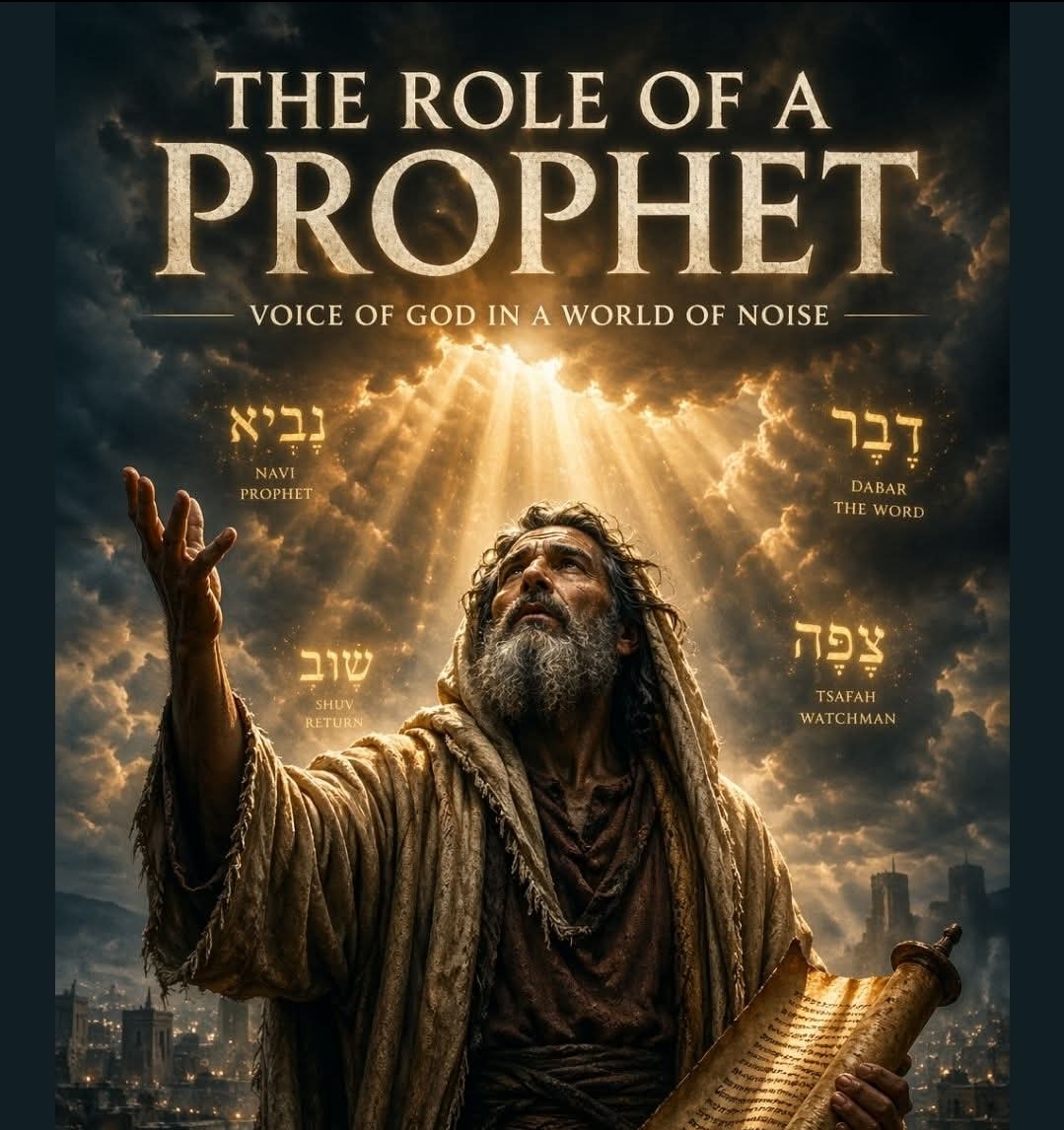
The Hebrew word for prophet is נָבִיא (nāvî’), which carries the idea of one who is called or one who speaks on behalf of another. A prophet stands between heaven and earth, not to invent a message, but to deliver what the Father has already spoken.
YAHUAH Himself defines the role: “I will put My words in his mouth, and he shall speak to them all that I command him.” (Deuteronomy 18:18)
1. The Prophet as YAHUAH ’s Mouth
The prophet does not speak from opinion, emotion, or culture. He speaks from revelation.
Another Hebrew term often associated is דָּבָר (dābār)—meaning word, matter, or divine utterance. When the “word of the Father came,” it wasn’t a thought, it was a living, authoritative communication from the Father.
A true prophet carries dābār, not personal agendas.
2. The Prophet as a Watchman
Prophets are also described as watchmen.
The Hebrew word צָפָה (tsāphāh) means to look out, to observe, to keep watch.
“Son of man, I have made you a watchman…” (Ezekiel 3:17)
This reveals a critical role: A prophet sees what others ignore and warns before destruction comes. They are not always welcomed, because truth often confronts comfort.
3. The Prophet Calls for Return, Not Applause
The prophetic voice is not designed to entertain, it is meant to restore alignment with YAHUAH.
The Hebrew word שׁוּב (shûb) means to return, to turn back. This is the heartbeat of prophetic ministry: “Return to the YAHUAH.”
Prophets like Jeremiah, Isaiah, and Elijah didn’t just speak, they called people back to covenant.
4. The Prophet Stands in YAHUAH’s Counsel
Jeremiah 23:18 asks: “Who has stood in the counsel of the YAHUAH?”
The word “counsel” comes from the Hebrew סוֹד (sôd), meaning secret, intimate council, divine assembly.
A true prophet is not formed in public platforms, but in private encounters with the Father. They speak publicly what they have heard privately.
5. The Burden of YAHUAH
Prophetic messages are often described as a “burden” from the Hebrew מַשָּׂא (massa’), meaning a weight, a heavy load to carry.
This reminds us: True prophecy is not light, casual speech, it carries the weight of heaven.
6. The Prophet Points to YAHUSHUA
Ultimately, all prophetic ministry finds fulfillment in YAHUSHUA — the Word made flesh.
“For the testimony of YAHUSHUA is the spirit of prophecy.” (Revelation 19:10)
The prophet’s role is not to draw attention to himself, but to reveal YAHUAH ’s heart and point people to His truth.
FINAL THOUGHT
In a generation flooded with voices, opinions, and spiritual noise, the true prophetic voice remains rare and necessary.
Not everyone who speaks boldly speaks for YAHUAH, but those who truly carry His Word will: Speak truth, even when it costs them, call people to repentance, not popularity, stand in intimacy with YAHUAH before speaking publicly, because a prophet is not defined by volume…but by alignment with the voice of the Father.
The Father is still speaking, the question is: who is truly listening and who is truly sent?
Shalom,