There is something about waiting that irritates the flesh. We do not want to wait; we do not like standing in a queue and waiting our turn to be helped. Sometimes waiting can feel like a waste of time because we are accustomed to movement, growth, and progress rather than remaining in one place. We are a fast-food generation, where everything must happen quickly. If the Wi-Fi is too slow, we become impatient. If the traffic light stays red for too long, we want to cross before it turns green.
Waiting is not one of the flesh’s strong points, yet it is often in the waiting that YAHUAH does His deepest work within us.
QAVAH: THE POWER OF WAITING ON YAHUAH
Micah found himself living in a time of moral decay, corruption, and uncertainty. Trust had been broken, justice was scarce, and darkness seemed to be increasing on every side. Yet in the midst of these conditions, he made a remarkable declaration:
“Therefore I will look unto YAHUAH; I will wait for YAHUAH of my salvation: my Aluah will hear me.” (Micah 7:7)
The word “wait” in this passage is not the language of passive resignation. It is the language of confident expectation. Micah was not surrendering to despair, he was positioning himself in faith. Though circumstances around him appeared hopeless, his eyes remained fixed upon YAHUAH.
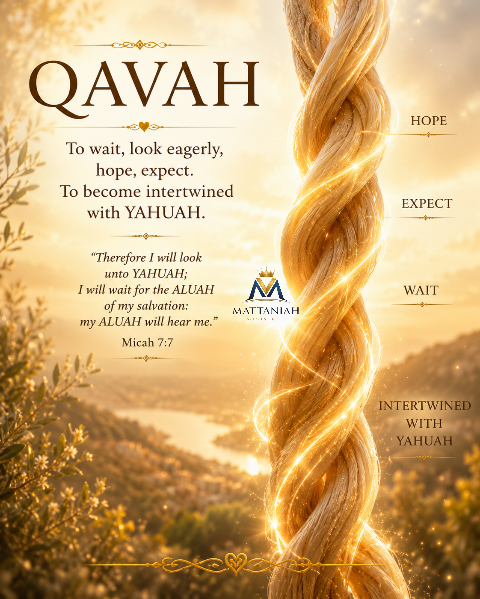
The Hebrew understanding of waiting reveals something even deeper. The word often used for waiting on YAHUAH is qavah (קָוָה), a word that carries the picture of strands being twisted together to form a strong cord. Waiting, therefore, is not merely enduring the passage of time. It is becoming intertwined with YAHUAH—His purposes, His promises, and His timing.
While the flesh sees delay, Heaven sees preparation. While we focus on what has not yet happened, YAHUAH is often weaving strength, character, endurance, and faith into our lives. The waiting season is not wasted time, it is divine workmanship.
Like Micah, we are called to lift our eyes above the chaos around us and declare, “I will look unto YAHUAH. I will wait for the Aluah of my salvation.” Those who choose to qavah upon Him discover that waiting is not weakness, it is the place where strength is renewed and hope is anchored in His faithfulness.
EMUNA – The knowing that He whom you trust is alredy holding your story.
Micah’s declaration in chapter 7 was not rooted in wishful thinking or optimism. It was rooted in emunah.
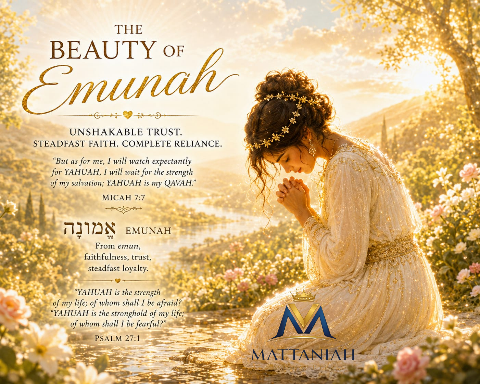
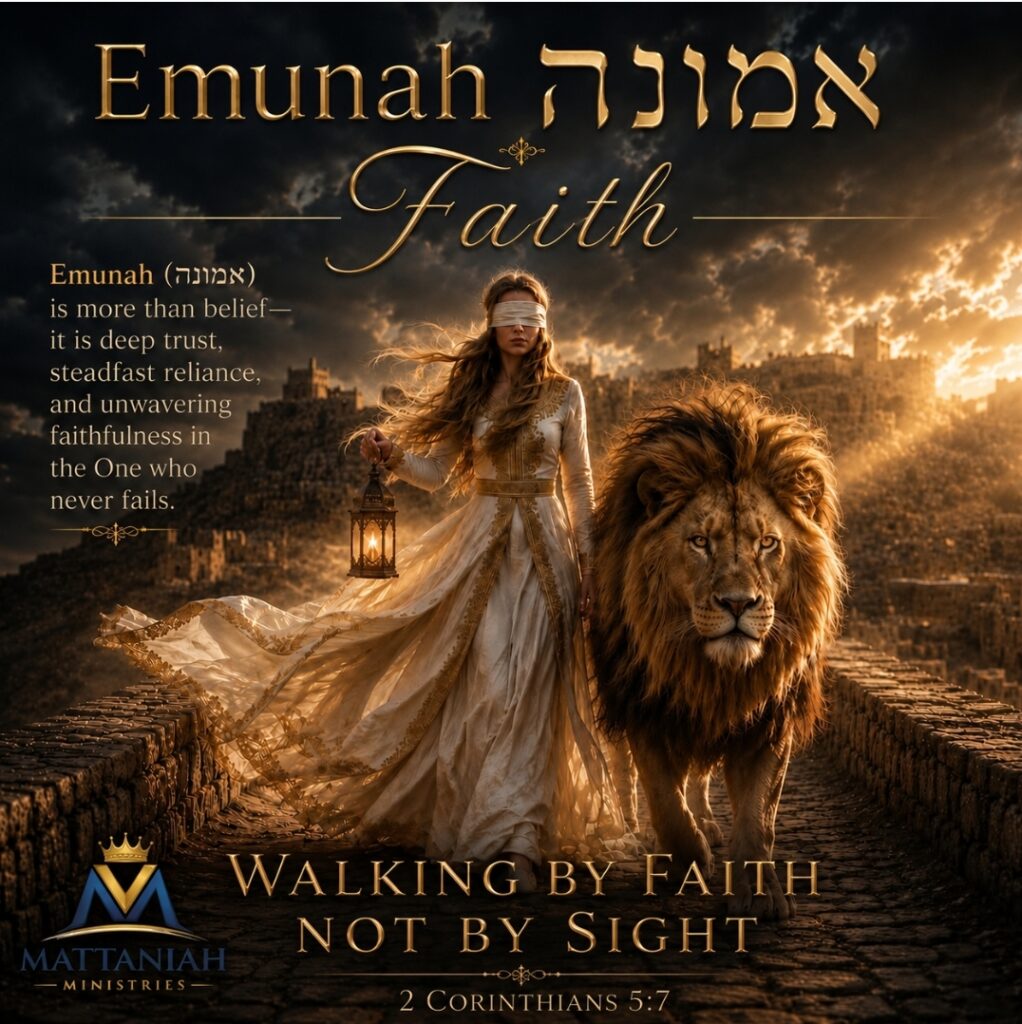
Often, when we hear the word “faith,” we think of belief. We think faith means agreeing with certain truths or hoping that something good will happen. Yet the Hebrew word emunah carries a much deeper meaning. It speaks of firmness, steadfastness, stability, and faithfulness. It is not an emotion or a feeling. It is not dependent upon circumstances. Emunah is a settled confidence in the character of YAHUAH.
Emunah is the ability to remain steady when everything around you are shaking. It is the deep inner knowing that YAHUAH is trustworthy even when His hand cannot yet be seen. It is confidence in His faithfulness before the answer arrives.
This is why Micah could say, “I will look unto YAHUAH; I will wait for the Aluah of my salvation.” His waiting was not passive. His waiting was anchored in emunah.
True biblical faith is not waiting for something to happen. It is knowing that the One in whom you trust is already holding your story. It is resting in the certainty that YAHUAH sees the end from the beginning and that nothing concerning your life is outside of His care or His control.
From this place of emunah flows qavah.
The person who possesses emunah can qavah. They can wait. They can endure the process. They can remain steadfast through the delay because their confidence is not in what they see, but in the One who sees all things.
Qavah is the posture of waiting / Emunah is the foundation beneath it.
As we become intertwined with YAHUAH through qavah, our emunah grows stronger. And as our emunah grows stronger, waiting ceases to be a burden and becomes an act of worship. We no longer wait anxiously for YAHUAH to move; we rest confidently in the knowledge that He is already at work, weaving together every detail according to His purpose.
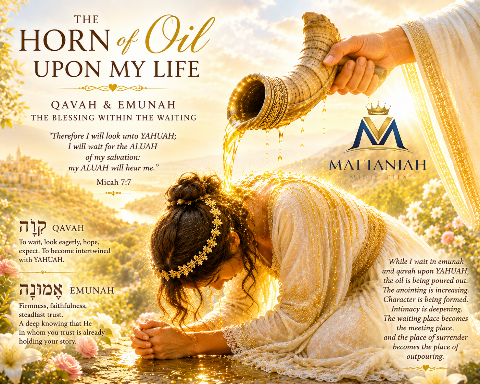
The Horn of Oil Upon My Life
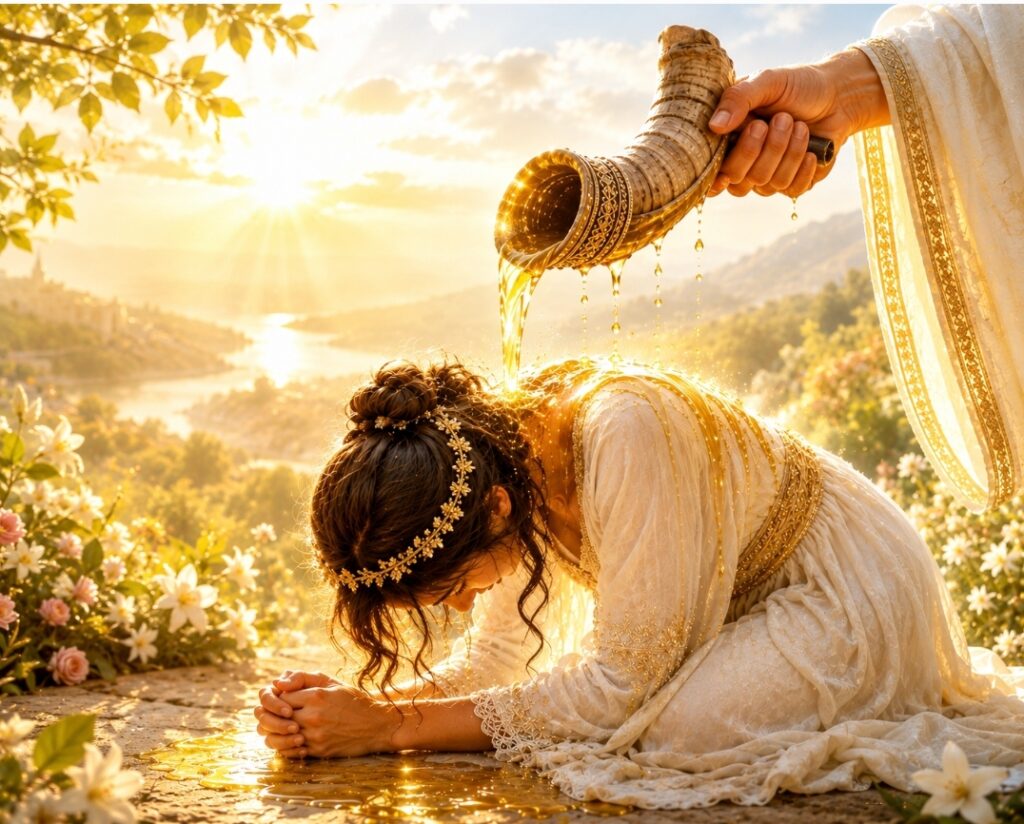
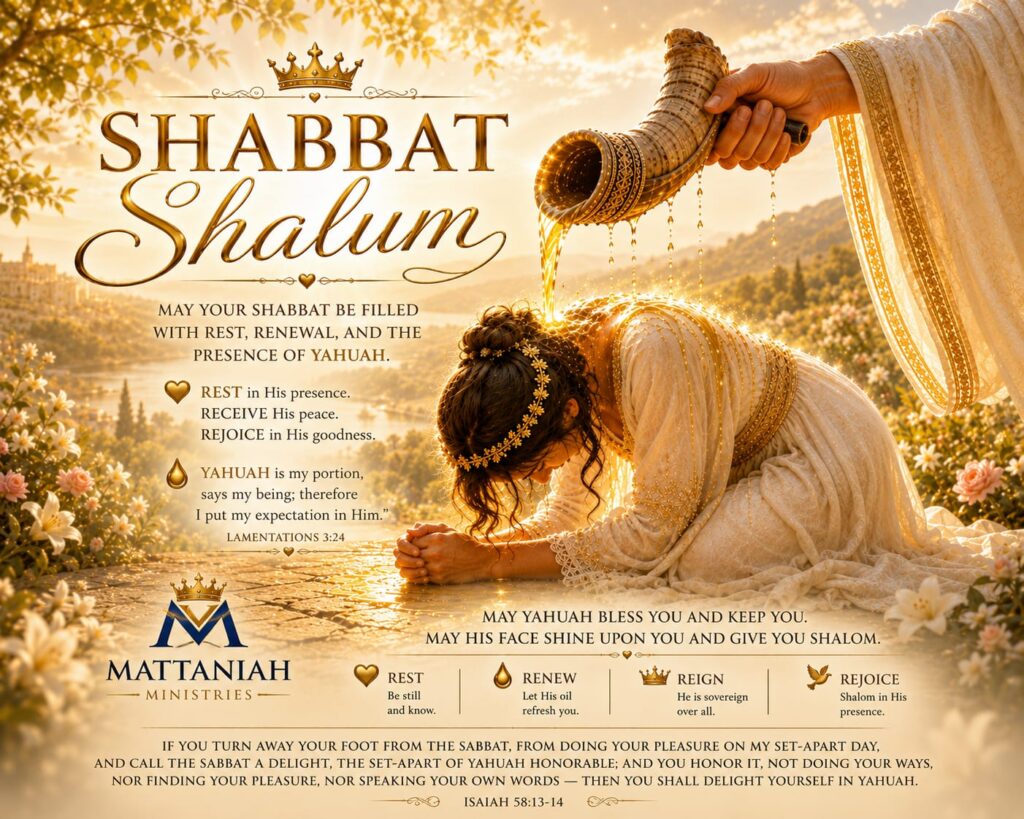
As I meditate on the relationship between qavah and emunah, I see the picture of a bride bowed low before her King. She is on her knees in prayer, waiting upon YAHUAH. Not striving. Not anxious. Not demanding answers. Simply positioned before Him with a heart fully surrendered and anchored in trust.
Above her is the Father’s hand holding a horn of oil, pouring it out upon her life.
This is the blessing hidden within the waiting.
The world sees waiting as delay, but Heaven sees it as preparation. While the bride is practicing qavah, becoming intertwined with YAHUAH and walking in emunah, firmly trusting in His faithfulness, the oil is being poured out. The anointing is increasing, character is being formed and strength is being renewed… Wisdom is being imparted and intimacy is deepening.
The waiting season is not empty. It is filled with divine activity.
Too often we focus on the promise we are waiting for, while YAHUAH focuses on the person we are becoming. The oil does not merely come at the end of the journey, it flows during the process. Every prayer, every act of obedience, every moment of trust, and every season of patient endurance positions us beneath the horn of oil.
Perhaps the greatest reward of waiting is not the answer we receive but the transformation that takes place beneath the flow of His anointing. For those who walk in emunah and choose to qavah upon YAHUAH, the waiting place becomes the meeting place, and the place of surrender becomes the place of outpouring.
May we learn to embrace the sacred mystery of waiting, knowing that while we are looking toward Him, He is pouring His oil upon us and when the appointed time arrives, we will discover that the season we once called delay was actually a season of preparation beneath the horn of oil.