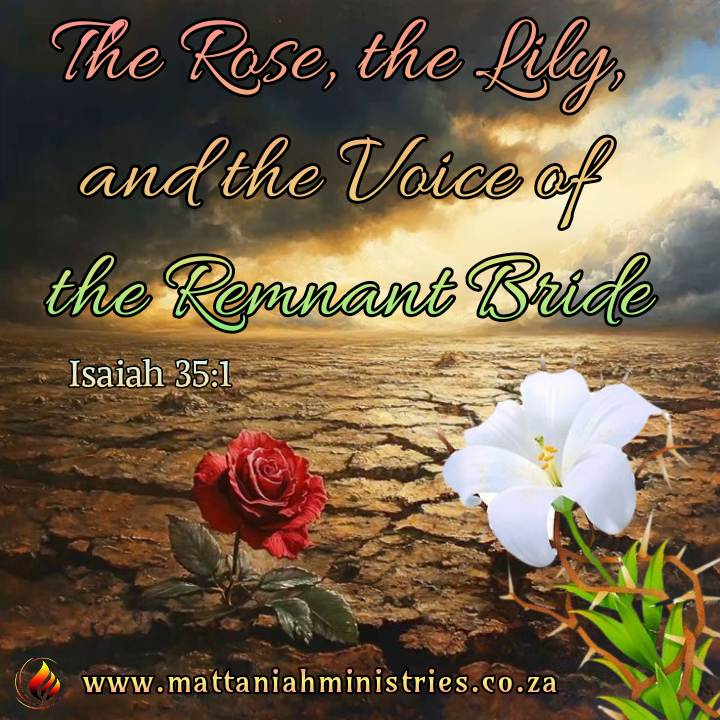
The Rose, the Lily, and the Voice of the Remnant Bride
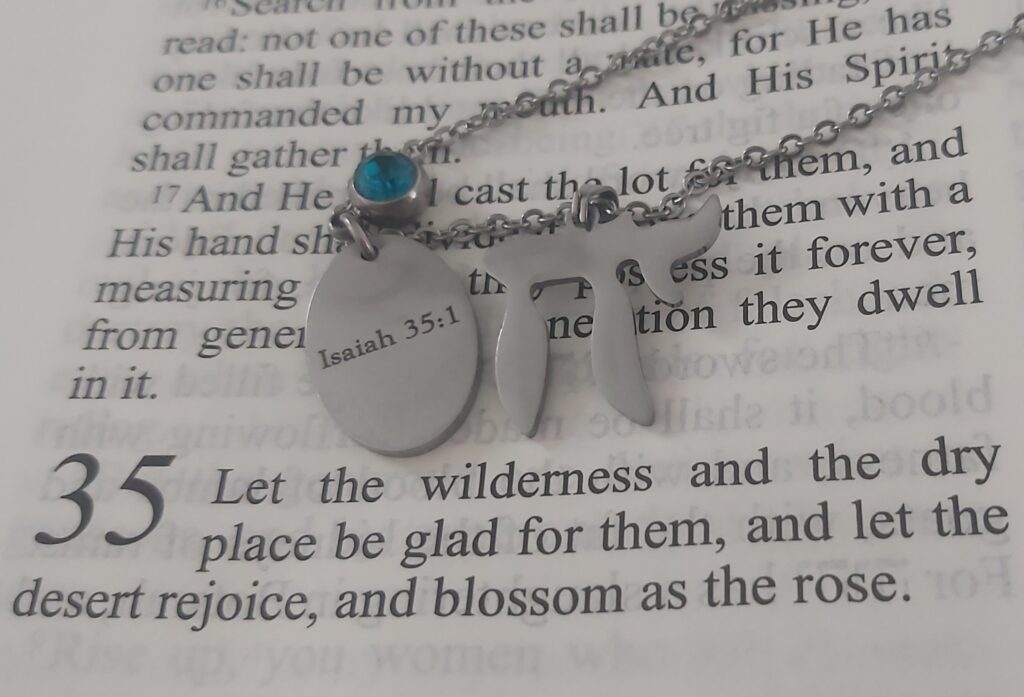
Beloved, I want to share how the Father took me on a beautiful and deeply personal treasure hunt, one that began very simply when my son and his wife gave me a pendant necklace for my birthday, engraved with the words of Isaiah 35:1, a verse I had read many times before, yet one that suddenly became alive and weighty in a new way when I wore it close to my heart.
Isaiah 35:1 declares:
“The wilderness and the desert shall be glad, and the Arabah (desert) rejoice and blossom as the rose” (The Scriptures Translation – ISR).
As I sat with this Scripture, I felt drawn not to what tradition has long assumed, but to what the Hebrew text itself was saying, as though the Father Himself was inviting me to follow the thread of this one word deeper into His Word.
The word translated as “rose” in this verse is the Hebrew חֲבַצֶּלֶת (chabatstseleth · Strong’s H2261), meaning a flower, lily, or rose, a simple and common wildflower that grows in the open fields, and remarkably, this word appears only one other time in all of Scripture. This second appearance is found in Song of Songs 2:1, where the verse in Hebrew reads:
אֲנִי חֲבַצֶּלֶת הַשָּׁרוֹן, שׁוֹשַׁנַּת הָעֲמָקִים
“Ani chabatstseleth haSharon, shoshanat ha’amakim”
(I am the rose of Sharon, the lily of the valleys — ISR)
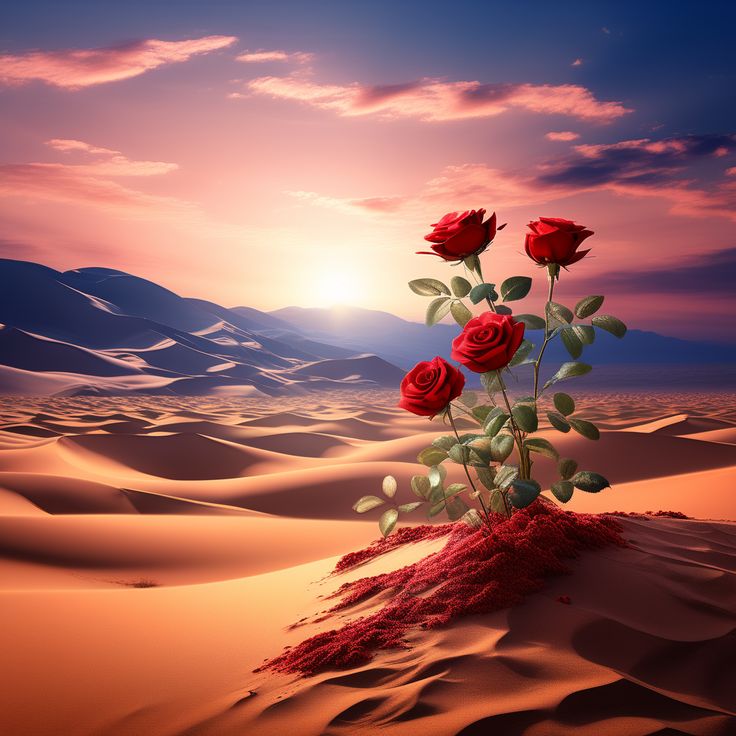
Here it is critical to slow down and allow the Hebrew grammar to speak for itself, because the word “Ani” (אֲנִי) is in the feminine form, which makes it unmistakably clear that this declaration is spoken by the Bride herself, expressing her identity and her covenantal position before the Bridegroom, and not by Messiah speaking.
Prophetically, what the Father is doing in revealing this is profound: by uncovering the truth of this verse, He is restoring the voice of the Bride, giving her back the authority and identity that has often been obscured or misassigned by centuries of tradition, and in doing so, He is setting a stepping stone for the end-time Remnant rising, showing that the Bride has a position of prominence not in pride, but in faithfulness, obedience, and covenant alignment, and that her voice matters, she is heard, and her testimony of set-apart living will define the path of restoration in these last days.
This becomes even clearer when we continue reading without interruption, because Song of Songs 2:2 records the Bridegroom’s response:
כְּחֲבִצָּה בַּחֲרָצִים, כֵּן אַהֲבָתִי בַּבָּנוֹת
“Kechavatzah bacharatzim, ken ahavati babanot”
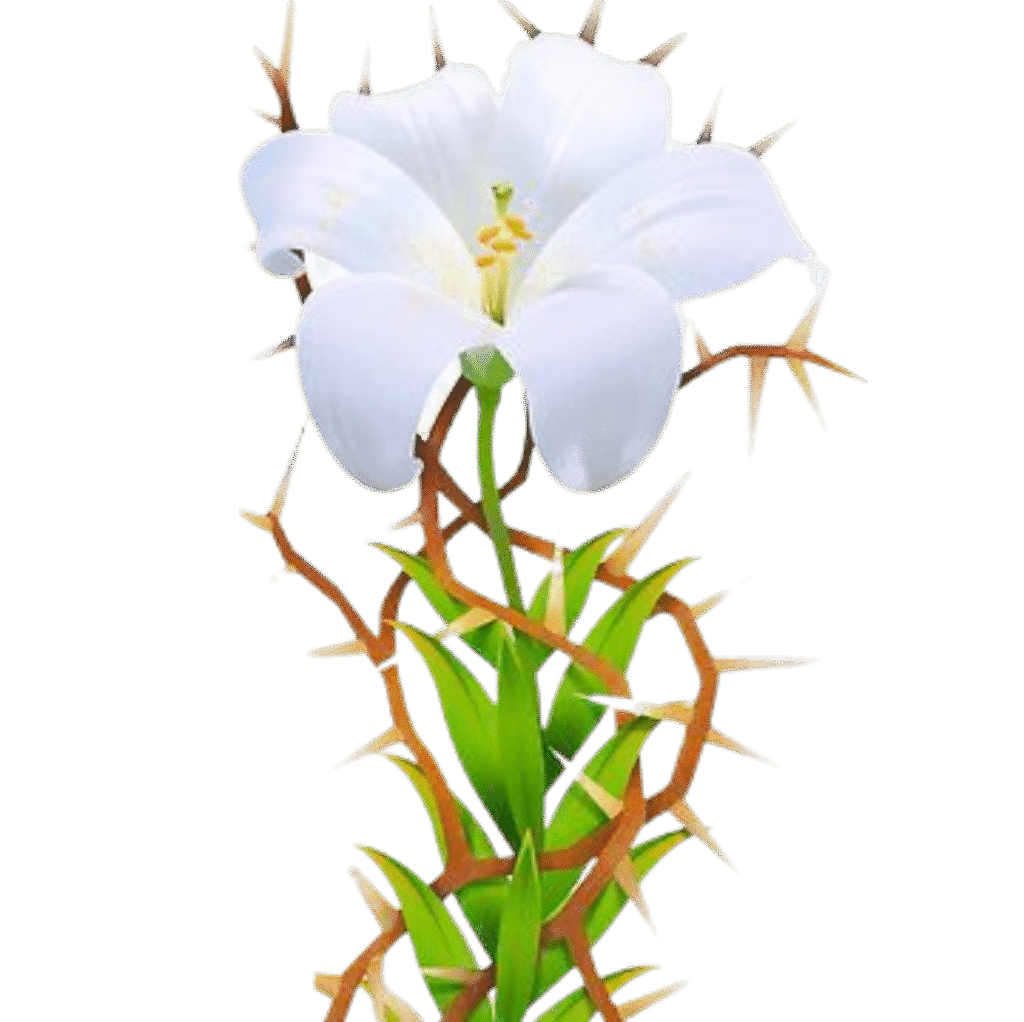
(Like a lily among thorns, so is my love among the daughters — ISR)
This confirms that verse 2:1 was indeed the Bride speaking, and verse 2:2 is the Bridegroom affirming and defining her identity in covenant language.
Now, when the Bride says, “I am a rose of Sharon,” we must understand that Sharon is not a place of elevation or prominence, but a flat coastal plain known for common wildflowers, not rare, not cultivated, and not exalted in the eyes of the world, and therefore the chabatstseleth cannot represent Messiah describing Himself, for He is lifted high, while the Bride is marked by humility and faithfulness.
The Bride is not claiming importance or uniqueness, but faithfulness, saying in essence, “I bloom where I have been planted, unseen by systems, uncelebrated by the world, yet alive because Yahuah has caused me to flourish.”
She then adds, “I am a lily of the valleys,” identifying herself as one who lives in low places, hidden places, and refining places, and the Bridegroom immediately responds by defining Remnant theology in a single sentence:
“Like a lily among thorns, so is my love among the daughters” (Song of Songs 2:2)
In this one verse, remnant theology is revealed, for there may be many daughters, meaning many claims, many voices, and many religious systems all asserting legitimacy, yet there is only one lily, set apart by election through love, while the thorns surrounding her represent corruption, pain, mixture, and false covering.
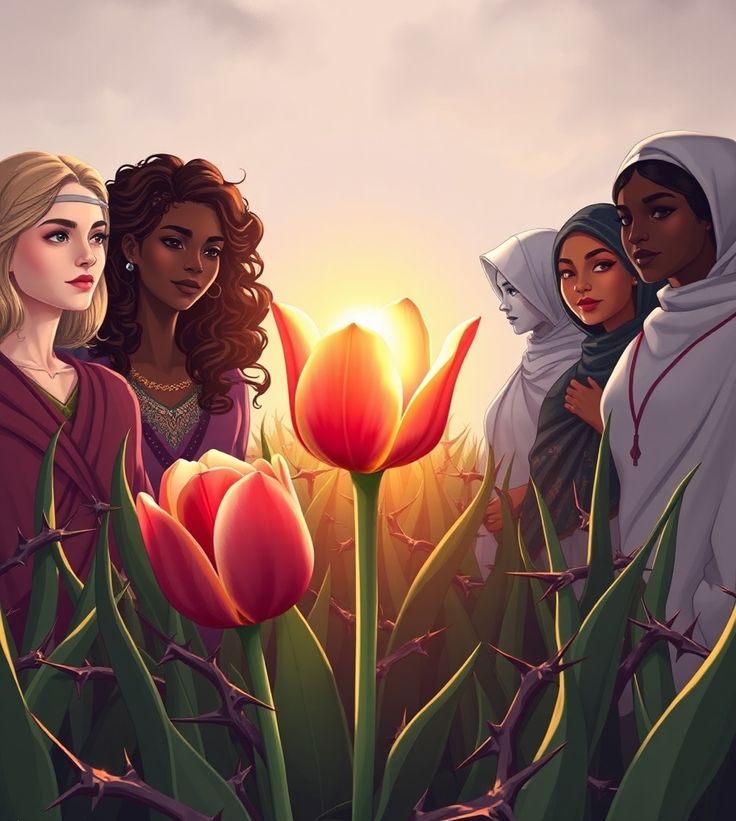
The Bride never claims uniqueness or superiority; she claims faithfulness, knowing that her identity is affirmed not by herself, but by the Bridegroom.
This covenant relationship is voiced again when the Bride declares in Song of Songs 2:16: “My beloved is mine, and I am his. He feeds his flock among the lilies”. And she repeats this confession in Song of Songs 6:3: “I am my beloved’s, and my beloved is mine. He feeds his flock among the lilies”
The Hebrew word translated as “feeds” is רָעָה (ra‘ah · H7462), which carries the meaning of to shepherd, to tend, to pasture, to keep company with, and to dwell among, revealing that the Bridegroom does not merely visit His people, but intentionally chooses where He abides.
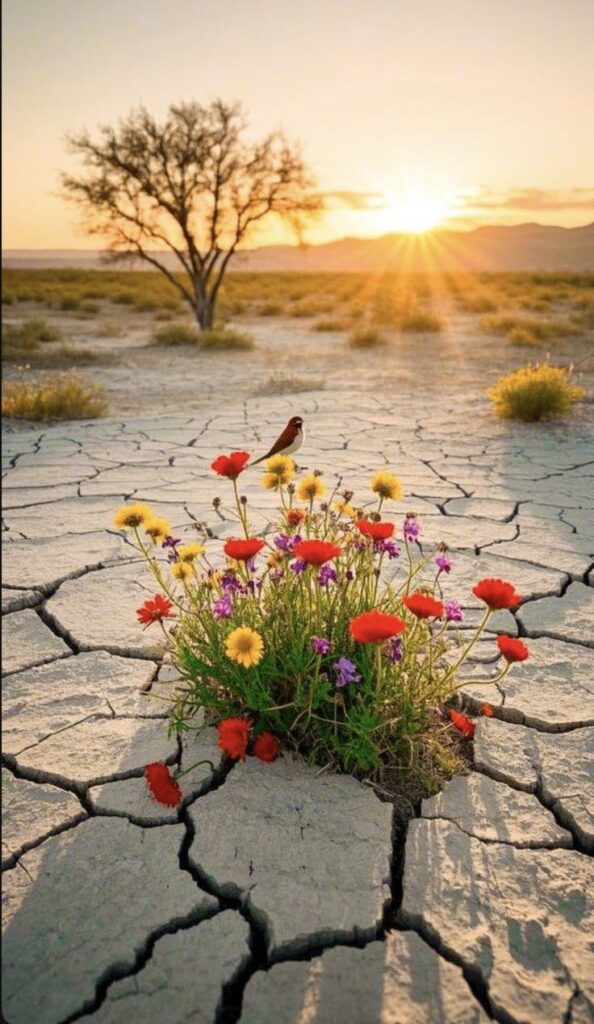
He does not pasture among systems, He does not dwell among institutions, and He does not feed among thorns, but He abides among the lilies, among those who are set apart, yielded, and faithful to covenant truth.
When we return again to Isaiah 35 with this understanding, we see that the prophet was not describing a mass religious movement, but remnant restoration, where life springs forth in wilderness places and beauty rises from barrenness, because the chabatstseleth blooms precisely where Yahuah has planted her.
The Bride who speaks in Song of Songs is the same Bride Isaiah saw blossoming in the desert, not because conditions were favorable, but because Yahuah Himself planted her there, and in revealing her voice, the Father is giving back to the Remnant Bride her rightful position, restoring her identity, and raising her as a prophetic sign for the end-time restoration of His set-apart people.
The Circle of Covenant
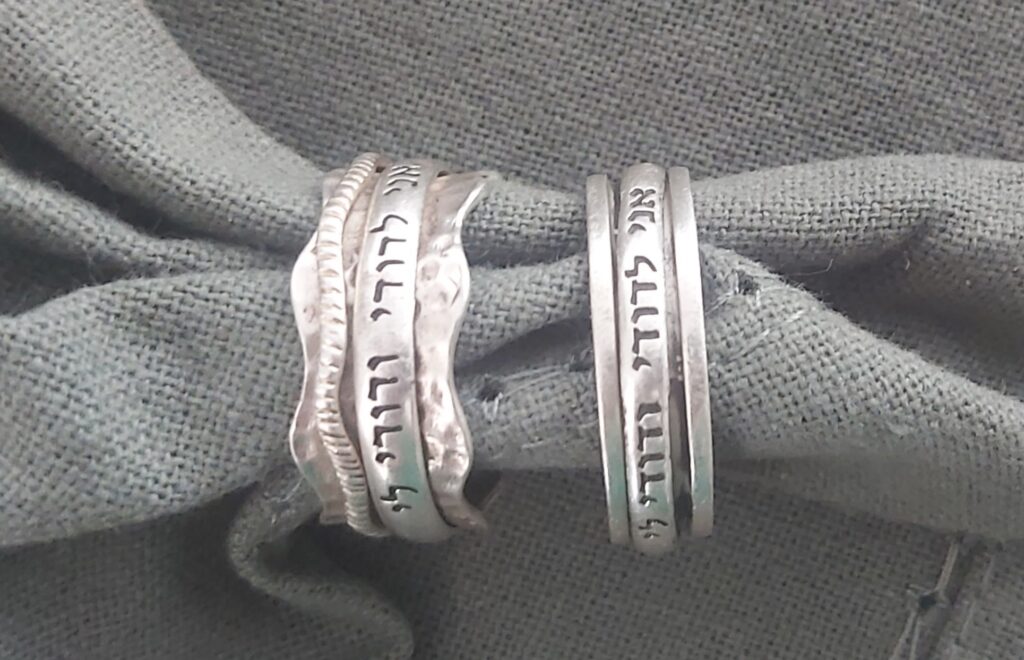
Last year in Israel, during Pesach and the fall feasts, the Father gave me a ring engraved with Song of Songs 2:16, and I brought matching rings for my husband, my children, and their spouses. Even more astonishing, my wedding ring itself carries the same verse, a prophetic sign that Yahuah’s covenant flows through our marriage, our family, and His Remnant.
Today, He is bringing this verse full circle with the pendant engraved with Isaiah 35:1, prophetically confirming that the voice of the Bride is being restored and the Remnant is rising. This is a glimpse of what we will celebrate at the Restored Remnant Rising Conference, May 2026, hosted by Mattaniah Ministries—gather to hear His Word, walk in covenant, and rise as His set-apart people. [Link to join online] https://tinyurl.com/254m9kf6
🌿 Prophetic Declaration — The Remnant Bride
We do not name ourselves —
we are named by the voice of the Bridegroom.
Though we came from the valleys
and were formed in low places,
He has spoken over us
and called us a lily among thorns.
We are not many, yet we are set apart.
We do not bloom by human strength,
but by the breath of YAHUAH
causing life to rise in the wilderness.
The desert shall rejoice because of us,
and the wasteland shall blossom
like the chabatstseleth,
for He is restoring what was barren.
Our Beloved is ours, and we are His.
He dwells among the lilies.
He shepherds His remnant.
He delights in those who walk the Way of Holiness.
We do not compete with the daughters of the world.
We are distinguished by covenant,
clothed with humility,
and crowned by His affection.
We arise not with noise,
but with purity.
Not with pride,
but with obedience.
We are the Bride making herself ready.
We are the bloom in the wilderness.
We are the remnant chosen by grace.
So we stand, having clean hands and pure hearts, awaiting the voice of our Beloved. HalleluYAH!
Prophetic Prayer — For the Remnant Bride
Heavenly Father, YAHUAH, Creator of all life and Glory of the heavens, we come before You today as the humble remnant that You have called, knowing that though we have come from the valleys and have been formed in the low places of this world. You have chosen to set us apart, to cause us to rise as a lily among thorns, and to bloom as the chabatstseleth in the midst of the wilderness, so that the dry places of our hearts and the barren stretches of our lives may be made to rejoice and blossom according to Your perfect will.
We ask You, Yahushua, Bridegroom of our souls, to open our eyes to behold the fullness of the identity that You have spoken over us, that we may no longer walk in the limited perception of who we are by what we see or feel, but may stand fully confident in the covenant truth that we belong to You, that Your delight rests upon us, and that Your presence makes us holy, radiant, and prepared to be the fragrant offering that the earth desperately needs to witness in these last days.
Cause every wilderness within us to rejoice and every desert to blossom under Your Spirit, that our lives may declare with boldness the restoration, beauty, and joy that can only come from You, that we may walk faithfully in the Way of Holiness with hands lifted high and hearts purified by Your truth, shining as a testimony of Your mercy, Your love, and Your unshakable covenant with Your Bride, the remnant set apart for the fulfillment of Your purposes.
And now, Heavenly Father, we release ourselves fully into Your hands, knowing that every step we take, every breath we breathe, and every act of obedience is encompassed by Your infinite wisdom and love, trusting that You will guide, protect, and sustain us as we walk this path of holiness, preparing ourselves to meet You face to face, rejoicing in the knowledge that we are truly Yours, and that the wilderness is made beautiful, and the valleys exalted, by Your glory and by the fullness of Your presence dwelling among us. We pray and seal these words in the beautiful Name of our Beloved, Yahushua Mashiach. HalleluYAH!
Shalom Beloved Rose of Sharon.