TORAH PORTION: MATTOTH
Biblical Calendar: 10th Month / Day 20 – Gregorian Calendar 2026/01/10
TORAH PORTION: MATTOTH – Numbers 30:1 – 32:42 / Jeremiah 1:1–2:3 / Matthew 5:33–37 / James 5:12
MATTOTH: Covenant Words and the Lily Among Thorns
Shabbat Shalom beloved,
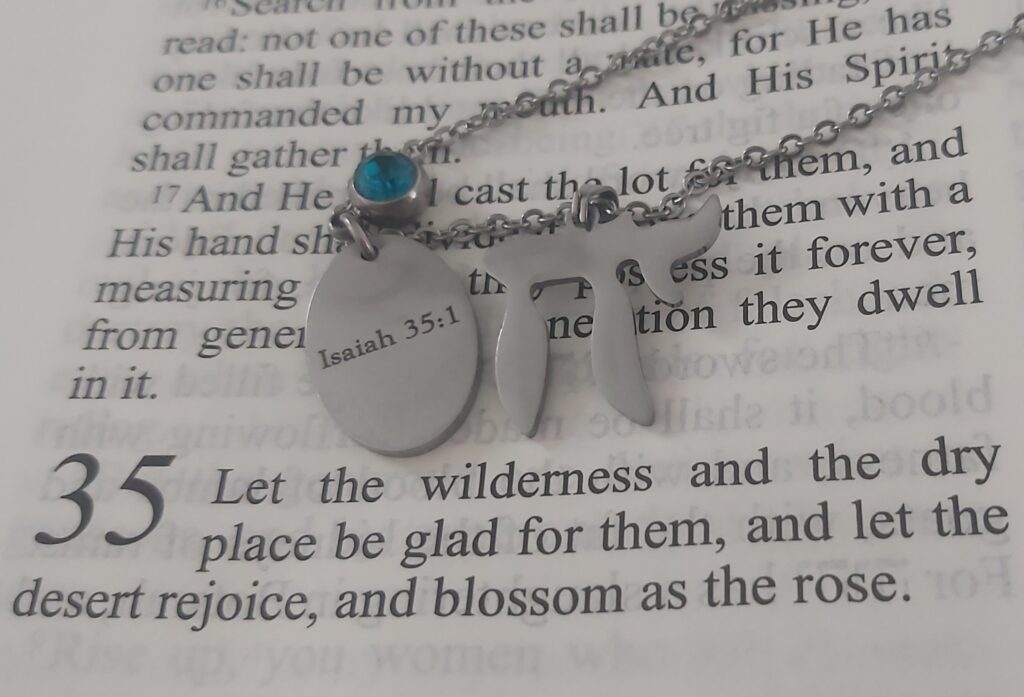
From a ring received in Jerusalem bearing the words “My Beloved is mine, and I am His,” to a birthday pendant engraved with the promise of Isaiah 35:1, what began as a personal moment unfolded into a prophetic treasure hunt, leading to a deeper revelation about the Rose of Sharon, the Lily among thorns, and the restoration of the Bride’s voice.
As these threads came together, today’s Torah portion, Mattoth, emerged with striking clarity, revealing that this journey was not merely about discovery, but about covenant—about words spoken, vows upheld, and a remnant Bride whose life must faithfully reflect what she declares before YAHUAH.
Mattoth: Vows, Voice, and the Rising of the Remnant Bride
The Torah portion Mattoth (Numbers 30:1–32:42) opens with a clear and weighty focus on the power and responsibility of spoken words. It declares that a vow uttered before Yahuah is never casual, but a covenantal act that binds the speaker to faithfulness, integrity, and obedience. From the opening verse, Mattoth establishes a foundational truth: what proceeds from the mouth must be upheld by the life, because words spoken in covenant carry spiritual authority and consequence.
This emphasis aligns prophetically with the revelation found in Song of Songs 2, where the Bride declares, “I am the rose of Sharon, the lily of the valleys.” The Hebrew word translated as “rose” is chavatstseleth (חֲבַצֶּלֶת, Strong’s H2261), a term referring to a common wildflower of the Sharon plain. It is not rare, exalted, or elevated, but resilient and faithful, flourishing quietly in the place where it has been planted. The Bride is not making a claim of superiority; she is acknowledging her placement and calling.

The opening word of the verse, Ani (אֲנִי)—“I”—is grammatically feminine in Hebrew, confirming that the Bride herself is speaking, not the Bridegroom. For generations, this verse was reassigned to Messiah, unintentionally silencing the Bride’s voice. In this appointed time, the Father is restoring that voice, not to exalt the Bride, but to return her to her rightful position within covenant order and responsibility.
Mattoth helps us understand why this restoration is essential. This portion teaches that spoken words reveal covenant alignment, and that faithfulness is not proven by titles, numbers, or claims, but by consistency and obedience. The remnant Bride is marked not by prominence, but by integrity.

When the Bride says she is the rose of Sharon, she is doing exactly what Mattoth calls for. She speaks truthfully and lives accordingly. She does not claim uniqueness; she claims obedience. Her declaration is not ambition, but accountability.
The Bridegroom’s response in Song of Songs 2:2 deepens this remnant picture: “Like a lily among thorns, so is My beloved among the daughters.” Here, remnant theology is expressed with divine clarity. Many daughters represent many voices, systems, claims, and movements. Thorns represent corruption, pain, and false coverings. One lily represents a set-apart life. This mirrors the witness of Isaiah 10:20–22 and Romans 11:5, where a remnant remains not by majority, but by grace.

This covenant identity is sealed in Song of Songs 2:16 and 6:3, where the Bride declares, “My Beloved is mine, and I am His,” and the Bridegroom reveals that He *“feeds among the lilies.” The Hebrew word for “feeds” is ra‘ah (רָעָה), meaning to pasture, shepherd, tend, and dwell among. He does not pasture among systems. He does not dwell among thorns. He abides among the set-apart ones, whose lives confirm their vows.
Mattoth demands integrity of speech, and the Bride embodies that integrity. Her vow is not merely spoken; it is lived. Her obedience becomes her authority.
Seen in this light, the restoration of the Bride’s voice in Song of Songs 2:1 is not a minor correction. It is a prophetic unveiling. The Father is returning the Bride’s voice because the end-time remnant must know who she is, where she stands, and what faithfulness requires. This revelation is a threshold moment, a stepping stone for a Restored Remnant Rising, where truth replaces tradition and covenant replaces performance.

Mattoth Declaration — The Vow of the Remnant Bride
We declare that we are a people whose words are bound to covenant and whose lives bear witness to what we have spoken before Yahuah. We declare that our “yes” remains faithful, our vows are upheld in obedience, and our mouths are aligned with truth. We declare that we are the lily among the thorns, not chosen by number or noise, but elected by grace and marked by love.
We declare that the Bride’s voice is restored, her position is revealed, and her faithfulness is rising in this appointed time. We declare that we live as a Restored Remnant, set apart, covenant-keeping, and shepherded by the Bridegroom who feeds among the lilies.

Closing Prayer
Father, we thank You for Your Word that restores order, unveils truth, and calls Your people back into covenant alignment. Teach us to guard our words and to honor the vows we have spoken before You, so that our lives reflect Your truth with integrity and faithfulness. Strengthen us to live as lilies among thorns, unmoved by systems, undistracted by noise, and anchored in obedience. Restore the Bride’s voice fully, establish her position securely, and lead us step by step as a remnant chosen by grace and defined by love. May our faithfulness prepare the way for what You are bringing forth in this generation.
In the Name of our Beloved,
Yahushua HaMashiach.

In Mattoth, the Father reminds us that covenant is carried not only in revelation, but in responsibility, and that words spoken before Him must be upheld by lives of obedience. Through the revelation of the Rose of Sharon and the Lily among thorns, He is restoring the Bride’s voice while calling her to walk faithfully in the position she declares.
Together, these truths reveal that the end-time Remnant Bride is not defined by noise, numbers, or systems, but by covenant faithfulness, integrity of speech, and a life aligned with truth. As vows are honored and voices restored, a faithful remnant rises—set apart, rooted in love, and prepared for what lies ahead.
Father YAHUAH is calling the Remnant to the mountain again, those with clean hands and pure hearts. Sons and daughters of the Covenant — this is your invitation to rise, to ascend, and to enter once again into the ancient pattern of the Tabernacle, restored for this generation. Father is calling forth a priesthood purified in His presence, walking in His ways, and carrying His light into the nations.
A divine restoration is taking place — and YOU are called to step into it.
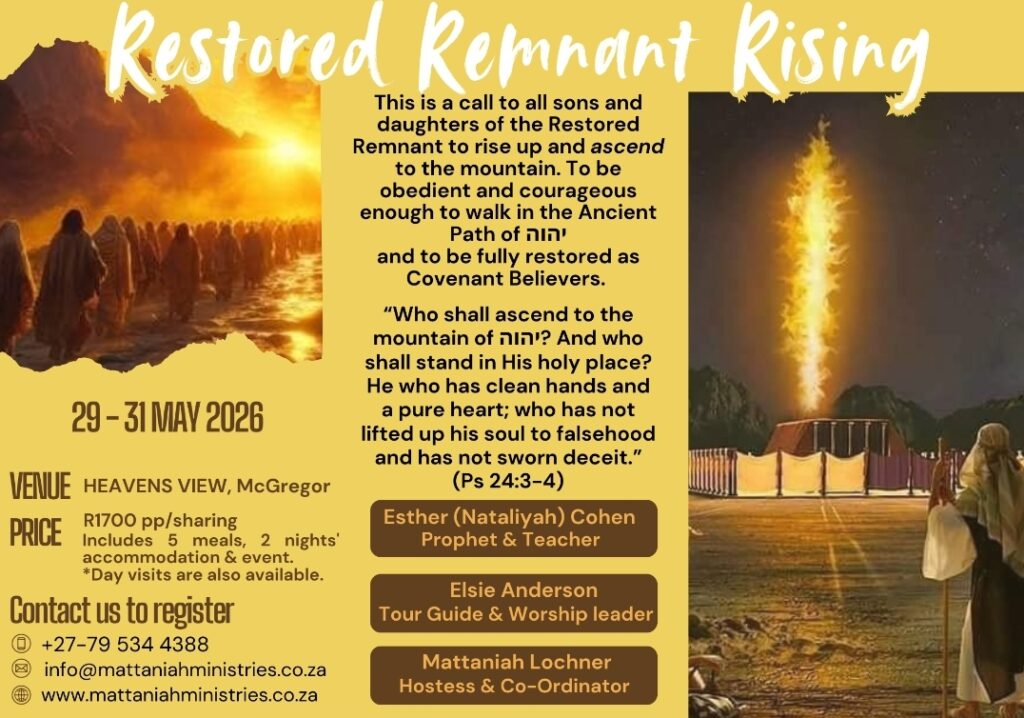
To act obediently on this call, please follow the link to register for this gathering of the saints on the mountain: https://tinyurl.com/254m9kf6
May Abba YAHUAH bless you beloved of the King,
Shabbat Shalom,